

436.7K
Downloads
3363
Episodes
G’day and welcome to Partakers Christian Podcasts! Join us for uplifting Bible teaching, inspiring readings, heartfelt worship, powerful prayers, and fascinating church history. Whether you’re new to faith or growing deeper in your journey, we’re here to encourage and equip you. 🎧 Tune in, interact, and be inspired—wherever you are in the world.
Episodes

Monday Jul 15, 2024
Monday Jul 15, 2024

Words!
Today's WOW Word is about Words! Words have power! Did you know that? Here is what Solomon said about them...
Proverbs 15:1 “A gentle response defuses anger, but a sharp tongue kindles a temper-fire”
Proverbs 15:4 “Kind words heal and help! Cutting words wound and maim”
Proverbs 15:23 “Congenial conversation—what a pleasure! The right word at the right time—beautiful! “
Proverbs 15:26 “GOD can't stand evil scheming, but he puts words of grace and beauty on display.”
Download the mp3 using the available links, to hear what Alphy has to say about the Bible and our use of Words in every day life...
Right Mouse click or Tap here to save this as a MP3 file

Thursday Mar 14, 2024
Thursday Mar 14, 2024
WOW Word - Covenant
~
In the same way, after the supper he took the cup, saying, ‘This cup is the new covenant in my blood, which is poured out for you. Luke 22:20 ~
Throughout history God has made covenants with humanity! These culminate in the New Covenant which was sealed through the death and resurrection of Jesus Christ. How much do you know about the Covenants between God and humanity? Come and listen to more about the amazing promises of God! ~
Right mouse click or tap here to download this as a mp3 file
Tuesday Mar 12, 2024
Tuesday Mar 12, 2024

WOW Word - Sin
~Today Alphy the WOWChurch Cat shares about
the WOW Word - Sin!
I wonder if you have ever played tennis and went to hit the ball but missed. Or you actually hit the ball and it went outside the court! Or perhaps you are a golfer, and one day you went to putt the ball in the hole, and you missed! The tennis player who hit the ball out of court or the golfer who missed the hole can be both be said to have committed a sin, because they missed! And that is what a sin, in biblical terms, is: it is missing the mark that God has set.
Big and Little Sins
And everybody, particularly in the West, including those who would not call themselves Christians, has some idea of sin. They generally call doing things like telling lies or speeding in the car, “little sins” because everybody does those, they say! And of course, only a tiny minority of people commit the real big sins, such as murdering other people or robbing banks! So to most people’s minds, there are degrees of sins, depending on how many people actually do that kind of sin.
Sin actually is...
So what actually is the biblical definition of sin? Sin is the lack of conformity, , to the Moral Law of God, either in deeds, attitudes, or state. Do you remember Jesus saying the two greatest commands were to love God and love others? Any breakage of those two commandments is sin, whether by a lot or a little. There are two kinds of sin. Firstly there are the sins, which are active disobedience, or the sins of commission. These are where God’s commands are actively broken! Secondly there are the passive kinds, which are sins of omission. These occur when people are not doing, as they ought to do (James 4:17)!
Stop! Confess! Live!
Everybody, including Christian Disciples, sin in one of those two ways! Of course Christian Disciples have accepted Jesus Christ and have had their sins forgiven. But Christian Disciples, still sin! But as a Christian Disciple, you are to take God’s view of sin! You cannot claim to be without sin, because as 1 John 1 says, you would be living in self-delusion and making God out to be a liar! So, when you realise you have sinned, be quick to confess it, so that your relationship with Jesus Christ remains at peak intimacy! For as 1 John 1v9 says, “Jesus is faithful and just and will forgive us our sins and purify us from all unrighteousness.” Jesus wants us to have complete fellowship with him, and by confessing sin; your fellowship with Him is made richer, more intimate and stronger.
Click or Tap here to listen to or save this as an audio mp3 file
Sunday Mar 10, 2024
Sunday Mar 10, 2024
WOW Word - Idolatry
Images of Idolatry
I wonder if you are like me and when you hear the word idolatry, you imagine somebody bowing before a statue and worshipping it. A good example is the story of the Israelites worshipping the golden calf, as recorded by Moses in Exodus 32. Or perhaps in our own time when seeing people bow down to the statue of the Buddha or one of the many Hindu gods.
Therefore, we tend to think that idolatry is worshipping statues or worshipping in other religions such as Islam, Jainism and Zoroastrianism. However, the Bible is very clear, certainly Jesus was, that idolatry is a threat to living and partaking of the Christian life. How can that be, you may very well ask?
Christian Idolatry
As a Christian, you are to love God and love others. Anything that replaces your love of God as your first priority, is an idol, and therefore, is idolatry. For idolatry is not merely worshipping statues. Idolatry is the transference of allegiance to something apart from God. It is worshipping created things, and not worshipping God the Father through Jesus Christ the Son of God in the power of the Holy Spirit.
Idolatry can be anything! For anything can take first place in your life! It may be your computer, your car, your books, your family, your church, a Christian leader, entertainment, celebrities and even love of yourself! These are all good things, in and of themselves, but they are not good things if they remove God from first priority in your life. These things can turn out to be idols, because they relegate your thinking of Almighty God to below first place.
Idolatry is the mind’s sin
Paul writes to the Roman church in Romans 1:18-25
"The wrath of God is being revealed from heaven against all the godlessness and wickedness of people, who suppress the truth by their wickedness, since what may be known about God is plain to them, because God has made it plain to them. For since the creation of the world God’s invisible qualities – his eternal power and divine nature – have been clearly seen, being understood from what has been made, so that people are without excuse.
For although they knew God, they neither glorified him as God nor gave thanks to him, but their thinking became futile and their foolish hearts were darkened. Although they claimed to be wise, they became fools and exchanged the glory of the immortal God for images made to look like a mortal human being and birds and animals and reptiles.
Therefore God gave them over in the sinful desires of their hearts to sexual impurity for the degrading of their bodies with one another. They exchanged the truth about God for a lie, and worshipped and served created things rather than the Creator – who is for ever praised. Amen."
In that passage of scripture, Paul links idolatry with immorality. Immorality is the outer sins and idolatry is the inward sin. Idolatry is an attitude inside you that says to God “You are not first place, this other thing is”. Somebody who commits the sin of idolatry is a slave to that something else, and is not a slave to God through Jesus Christ in the power of the Holy Spirit. Therefore, idolatry is not just worshipping in another religion and bowing down to statues. Idolatry is relegating God to second place, in both actions and attitudes. Therefore cast off anything that is blocking your relationship with Almighty God. As idolatry is primarily the sin of the mind, those depraved ideas turn to sins of lusts and idolatrous physical pleasures. Be renewed in your thinking and have a renewed mind, so that you can worship Almighty God through Jesus Christ the Lord, in the power of the Holy Spirit.
How’s that for a WOW Word?
Right mouse click or tap here to download this as a mp3 file

Friday Feb 09, 2024
Friday Feb 09, 2024

A Strategy to Cope (Hebrews 3)
How can we, as 21st century Christians, keep from falling away from our faith in God through Jesus Christ? It is a question I am often asked. I would call it the COPE strategy: Consider, Persevere and Encourage.
1. Keep Considering! (vs1-6)
Hebrews 3:1-6
The first thing we do is to consider Jesus or as the NIV here puts it "fix our thoughts". Now remember, that these are Hebrew believers. I guess we would call them Messianic Jews today. They believed that Jesus was their Messiah, Saviour and Lord. They were obviously coming under pressure from their Jewish friends and leaders to deny this Jesus and return to the fold. They would have been told how great Moses was. In the previous chapter we read how Jesus is greater than the angels, because He is God, but was made a little lower than the angels when he became a man.
Moses was cool!
In this chapter, we read a comparison between Jesus and Moses. Moses, to the Jews, was like a superhero. Moses was revered because it was to him that God revealed His will. Moses was the key figure in the establishment of Israel as a nation - God's chosen people! Moses suffered persecution and rejection from the rest of the family of Israel. He had great zeal for God and was willing to sacrifice everything for God. He had fellowship with God. Yet all this is merely a shadow and a prophetic sign of what was to come in Jesus. Moses, we read in Numbers 12:7, was faithful to God's house, God's people. The house of God is the people of God. It was this Moses who was held in such high regard by the Jews, that some might well have been tempted to renounce Jesus and go back to the old ways.
God's Messiah would need to be greater than Moses, and Jesus is and was this Messiah. Later on in the book of Hebrews, we discover that Jesus is greater than Aaron through whom the law was ministered; but here we see that Jesus is greater than Moses, the lawgiver, the servant of the house of God. Moses and Aaron represented God's house in Israel; Moses was the Apostle or Prophet and Aaron was the High Priest. Jesus, an Apostle and Prophet as well as being the High Priest, joined the two together. By Apostle, I mean as a Messenger - that's what an apostle is - a messenger or representative. As the Apostle of our faith, Jesus was faithful. Jesus was God's representative for us, making God known to us. Jesus was totally faithful, means to be both trusting and to be capable of being trusted. Moses was the one to whom the Law was given - the Mosaic covenant under which the Jewish people lived. This covenant with Moses commenced with the stipulation "Now if you will obey me and keep my covenant, you will be my own special treasure from among all the peoples on earth; for all the earth belongs to me." (Exodus 19v5). This covenant was to Israel in order that those who believed God's promise to Abraham, could know how to live rightly in accordance with how God wanted them to live.
This covenant with Moses covered the three areas of life:
- The commandments were given so they would know how to relate socially to God (Exodus 20v1-6)
- The judgments were given in order that they could relate socially to each other (Exodus 21v1 -4v11)
- The decrees dictated their religious life so that God could be approached by humanity on His terms (Exodus 24v12 - 31v18).
This covenant that God made with Moses and the ancient nation of Israel was never meant to be as a means for providing salvation. It was given so that they could realize the helplessness and futility of their own efforts and their need of God's help. It was to serve only as a protective fence until the promised Messiah came; the long waited for Saviour of all humanity, so that the whole world, Jew and Gentile, could be made right with God through faith and faith alone.
In Comes Jesus
And that is where Jesus comes in. As their Messiah and Saviour, Jesus ushered in the New Covenant, which was promised by God through the prophets Jeremiah and Ezekiel. What are the features of this New Covenant or promise?
Four features of this covenant are:
- Regeneration -God will write His law on the hearts of people.
- Restoration - God will be their God, and they will be His people.
- Promised Holy Spirit - God will indwell people and they will be led by Him
- Justification - Sins will be forgiven and removed eternally
This new covenant is sealed only through the perfect sacrifice of the God-Man Jesus on the cross. His blood ensures the truth of this New Covenant. His death pays the penalty for the sins of all people who say yes to God and are ready to run the race and travel the course. This New Covenant finalizes what the Mosaic Covenant could only point to: the follower of God living in a relationship with God conforming to God's holy character. That is one very specific way of Jesus being superior to Moses! The original readers of this letter being God-fearing Jews would be aware of all this.
They would also be aware that it is sin, which separates humans from God and as a consequence leads to both a spiritual and physical death (Romans 3v23, Romans 6v23, Isaiah 59v2). In the Old Testament, sins were dealt with by blood sacrifices of atonement as coverings for sin (Leviticus 17v11), for without the shedding of blood there could be no remission of sin (Hebrews 9v22). A blood sacrifice is God's way of dealing with sin. These blood sacrifices of the Old Testament signified several things:
- It provided a covering for sin.
- It showed the great cost of sin.
- It was an exchange or substitution.
- It was only always going to be a temporary measure, as it pointed forward to Jesus' death and it needed to be done over and over again.
How is Jesus better than Moses?
The answer lies in the solution to sin. The ultimate solution to sin lies not in the continuing animal sacrifice under the Covenant with Moses, because as the writer later in Hebrews 10v4 stipulates the blood of animals cannot take away sin but was only ever going to be a veneer or a covering. That was why it was necessary to repeat time and time again!
It is only through the victorious death of Jesus, that sin is permanently taken away (Hebrews 9:v11-15, 26-28), because Jesus is the permanent sacrificial substitute! It is as if the writer is saying give up on Jesus, stop considering Him and you would still be in your sins - that's the way the original readers would have understood it!
As for us?
As followers of Jesus Christ we are built together so that the Spirit of God may join us together in love. Both individually and as a group, we are the house of God. Jesus said, "We will come and make our home in you". We know Jesus has been faithful as a Son over God's people. We celebrate His faithfulness at Easter, when we acknowledge and rejoice at the sacrifice He made for us. We remember it in the act of Communion, which we will have later. Jesus suffered persecution and rejection from his peers. We know Jesus was godly and full of zeal for God, and was willing to sacrifice everything for God and his people. We are the house of God. And yet, do we not reject Jesus sometimes, or do we keep on considering? Do we give Him and trust in His faithfulness to complete the good work he has started in us?
This NIV translation has "fix your thoughts". Here is how the New King James Version puts verse 1 "Therefore, holy brethren, partakers of the heavenly calling, consider the Apostle and High Priest of our confession, Christ Jesus". I personally think that that is a better way of putting it. And not only because it has the word partakers in there! To "consider" has a much broader meaning than just "fixing your thoughts" as the NIV puts it. It means to seek, to fully understand or comprehend as well as fixing thoughtfully. To consider means to contemplate, to think about, to persevere with, to concentrate on and to fix eyes and thoughts upon.
We have to allow Jesus Christ to permeate every aspect of our life, if we are to be partakers of Him. To consider not just how Jesus would do something, but how Jesus would think. What attitude would Jesus take? What would Jesus not do? Just as the Hebrews receiving this letter were told to do, in their race of the life following Jesus, we too are to hold fast to our courage, but only by considering Jesus and trusting in Him relying on the Holy Spirit to help us as we ask Him. This phrase "to consider" is perhaps the central theme of the book of Hebrews. We are to consider Jesus, the Apostle and High Priest of our confession. Jesus was faithful to the purpose of His Coming to be among people. His purpose in coming to earth, as a mere man, was to die for sins and be raised up on the third day so as to be victorious over death and sin. This Jesus perfected our human nature in His life of simplicity, suffering, devotion and obedience. He now lives at the right hand of the Father in heaven, to communicate to us His life and blessedness through the indwelling Holy Spirit. We must therefore consider Jesus in everything we do, every thought we think and in every attitude.
This is the aim of the writer to persuade these Hebrew Christians that if they knew Jesus to be the faithful, compassionate Almighty apostle and priest in Heaven, then they would find everything in Him that they needed for life. Moses couldn't help them, but Jesus could! Moses had died, they could perhaps visit his tomb if they wanted to. But Jesus, well, Jesus' tomb was empty! Jesus is alive! The life of these Hebrew Christians would be united with their faith, and united with the life of Jesus whom their faith would glorify God. To these Hebrew Christians their salvation was based on Jesus, but to renounce Jesus and go back to following Moses was apostasy. Moses couldn't offer salvation because the Law was not meant as a means of salvation! But what about you? Are you trusting in this Jesus for salvation or are you even subconsciously relying on your own good works or something else? That was what these believing Hebrews were to do - consider how vastly superior Jesus is to Moses. We also are to consider how superior Jesus is to all other things that would try to entangle us and allure us away with false promises.
2. Keep Persevering!
And then after considering Jesus, these Hebrew Christians were to do something! They were to persevere in believing. The writer now warns these Hebrew believers against the sin of unbelief, which is the hardening of their hearts. The writer quoting from Psalm 95 reminds them of the way Israel rebelled against God in the desert. He warns them not to be like their forefathers, who did not trust fully in the Lord their God. From Psalm 95, he proceeds to remind them of their ancestors' deeds of unbelief. The privilege of the house of God is in hearing God's voice. By choosing not to listen to God's voice, peoples' hearts grew hard and cold. These words are of course written to believing Christian Hebrews, not unbelieving Jews, and are as appropriate for us today, as it was for them when they received it. As the people of God today we need to be ready to listen to God's voice. As we see God working in us, our trust and belief in Him grows. If we do not believe in Him to help us, then of course our hearts will harden against him. As we grow and run the race, willingly sacrificing what needs to be sacrificed, we realize the glory and majesty of God, His holiness and perfection, His love and tenderness, and gladly listen to hear what He says to us, and willingly receive what He gives us.
When you pray, do you have your Bible open? When you read your Bible, do you do so prayerfully and considerately? Bible reading and prayer go together! Unbelief stops a person from holding fellowship with God. Our God is alive, not a dead idol on the shelf or in the bank. This church of Hebrew believers, for all their Christian profession and religious exercises, were in danger of falling away from God, due to their not believing totally in Him. God would not abandon them, but they would abandon God! We need to take care, in case we also fall into unbelief. Unbelief and falling away act upon and react to each other. If we have any unbelief in our hearts tonight, then let us ask God to give us a heart that believes in Him so that we may not fall away from Him. And what is one of the main ways we can stop from falling away or letting others fall away into unbelief?
3. Keep encouraging!
So we keep on considering Jesus. We persevere in our believing in Him. Now thirdly, to show we are considering Jesus and are persevering in our believing Him, we are to encourage and be encouraged! In verse 12, we read, "See to it, that none of you has a sinful, unbelieving heart that turns away from the living God". This means, that we are not only to take care of our own hearts, but as verse 13 goes on to say, we are to encourage and ensure no one is in danger of falling away. We who are believers, have to make sure that each one of us is staying on the path that leads to life, that is, the race towards Jesus.
This group of Hebrew Christians were to help and encourage each other! And so are we! For us, maybe it is by phoning somebody you haven't seen in a while or to phone somebody you get a random thought about! If we see a brother or sister that we know is starting to fall out of the race, we need to do all we can to stop them falling away. We need to encourage them, to continue considering Jesus and believing in Him. We all know of people who are new believers, full of joy and zeal for God, that end up falling back into unbelief, unable to hold fast to the end. To some degree, it is because the Church body has failed to encourage them to continue on in the race. It is our duty, and our daily responsibility to encourage people on in the race or the journey.
However, to encourage is not just these easy things. To encourage can also mean to rebuke, to correct in love. I look back at my tutor, during my first stint of Bible College back in the 1980s. His name was Ed. Ed the head we called him. We had weekly tutorials then. Every week he would get me to read a chapter of Knowing God by JI Packer and a chapter of Mere Christianity by CS Lewis. Then during our tutorial I would have to try and explain what I learnt from both those chapters. It was a slog at times I tell you. Sometimes I would get a clip round the ear for being stubborn or just being plain thick! But it gave me a good grounding for my Christian thinking and life of discipleship to Jesus. Or I think back to my dear friend Rose, a kind and dear elderly lady from the church I used to attend back in the 80s. She would have us young adults back to her house overlooking the ocean for coffee after church on a Sunday evening. She would always be loving, caring and encouraging to all people - ready to lift them when they were down and eager to cheer from the sidelines. She was also a tough cookie at times and if we got out of line, she would say so in no uncertain terms! Not so much an arm around the shoulder then but a good swift kick! Both methods of encouragement when required!
When we see somebody sinning or contemplating sinning, our reaction should be to gently encourage him or her not to continue in pursuit of that sin. Therefore in considering Jesus, believe in Him and encourage others to do the same. That is the purpose of encouragement mentioned here..
Let all of us give ourselves to the service of Jesus to watch over other people: let all the fresh grace and deeper knowledge of Jesus we see, be for the service of those around us. Where will you and I be spiritually next year, in 10 years' time, in 25 years' time? Will you be able to honestly say to yourself at that time, I have grown spiritually and haven't fallen away?
If you are here tonight, would call yourself a Christian, and you are unsure where you are, then do this. Look back and remember what Jesus has done for you. Consider Him as you look back to your first profession of faith in Him. Consider that just as He died, you died in the waters of baptism. Consider that just as He rose to physical life, you rose from the waters of baptism and will also rise again when you physically die. Consider that just as Jesus will be glorified, so too will you be glorified before the Father - if you hold out until the end. Be assured of who you are - you are a child of the living God - hold out to the end. He has a firm grip on you, so maintain your grip on Him! Remember who you are! The way to cope with the rigors of 21st century life as a Christian believer is to keep considering, keep persevering and keep encouraging. Thank you...
Click or tap here and save this sermon MP3 file to your computer
Thursday Feb 08, 2024
Thursday Feb 08, 2024
The WOW of Grace (Romans 8:38-39)
Romans 8:31-39 What, then, shall we say in response to this? If God is for us, who can be against us? He who did not spare his own Son, but gave him up for us all—how will he not also, along with him, graciously give us all things? Who will bring any charge against those whom God has chosen? It is God who justifies. Who is he that condemns? Christ Jesus, who died—more than that, who was raised to life—is at the right hand of God and is also interceding for us. Who shall separate us from the love of Christ? Shall trouble or hardship or persecution or famine or nakedness or danger or sword?
As it is written:
"For your sake we face death all day long; we are considered as sheep to be slaughtered."
No, in all these things we are more than conquerors through him who loved us. For I am convinced that neither death nor life, neither angels nor demons, neither the present nor the future, nor any powers, neither height nor depth, nor anything else in all creation, will be able to separate us from the love of God that is in Christ Jesus our Lord.
Come and listen to discover more!
Click or tap here to save this as an audio mp3 file
Saturday Feb 03, 2024
Saturday Feb 03, 2024
God pays a visit to Solomon!
2 Chronicles 7v11-22
Introduction
Yesterday we looked at David's final recorded public prayer in 1 Chronicles 29. We saw that David's God oozed greatness, power, glory, victory and majesty from all aspects of His very being! All of which are essential attributes of who He is: unchangeable and permanent. We discovered that this God is a God who gives and gives abundantly! The temple was yet to be built but the gifts from the King and the people had come in! People were waiting to start! Not only to build it but to serve within it! We came to the conclusion that we should pray not just for what God can give to us but also what we can give and do for our God! Giving not just money and goods, but our talents and imagination! Because from that, the community we live, work and worship within could be transformed to God's glory!
But now the Chronicler has moved on in his story! The remnant of Israel you may remember has returned from exile and the Chronicler is giving them an abridged version of history! The great king David has died, and his son, Solomon, is now on the throne. Solomon has had his first encounter with God and received the gift of wisdom! In Chapter 6, Solomon has prayed a great prayer to His God! We shall look at that in the podcast tomorrw.
Here, in our first reading, from the first 3 verses of chapter 7, we hear the Chronicler regaling one of the many great WOW moments of the Old Testament, when the glory of the Lord came down like fire and filled the temple to overflowing! The people fell down in worship of a great God, who was their God! This was followed by a great scene of abundantly joyful sacrificial worship to this God!
In the passage before us tonight, v11 to v22, the temple is now complete. Solomon is now probably sleeping in his palace. It has been 13 years since he prayed that prayer in chapter 6! No doubt, during those 13 years, many times has Solomon wrestled in his mind over what he prayed... Then, one night God Himself turns up.
Here the Chronicler reveals what God said to Solomon. The original readers/hearers are a remnant of the great nation of Israel, just returned to their land after being in exile! Probably wondering what happened, because under Solomon, the nation of Israel reached its pinnacle! Asking themselves questions like: Who is our God? Who are we, Israel, as a nation? Why are we in the situation we find ourselves in? The Chronicler is putting across his own theology as he writes this book of Chronicles! His theology, however, is consistent with the writings of the rest of the Old Testament and indeed the New Testament! So what does the Chronicler wish to convey to the remnant about this God from this encounter with Solomon?
1. A God of all History
The first thing I see, from this passage, is that their God is a God of history! All human history is covered beneath his throne - the past, present and future! a. God of the past! He is the God of Israel's past! God throughout history had made covenants with Adam, Noah, Abraham, Moses and here, God reminds Solomon of the Covenant that He made with Solomon's father, David! This covenant promised 3 things! That there would be:
- A land forever
- A dynasty without end
- A perpetual kingdom
b. God of the present But not only is He a God of the past, He is also a God of the present! He has heard the prayers and accepted the temple as a place of worship - v12 "I have heard your prayer and have chosen this place for myself as a temple for sacrifices." He is the God of the present because He is speaking to Solomon in Solomon's present! Visiting Solomon, probably while Solomon is snoring his head off!
c. God of the Future So God is a God of the past and the present, but also a God of the future! And because God is the God of the future, all things are under His control! Even v13 "When I shut up the heavens so that there is no rain, or command locusts to devour the land or send a plague among my people", shows the God of the past, present and future being in control.
The Lord God says in this speech to Solomon, "I will..." several times! "I will hear!" "I will forgive!" "I will heal the land!" "I will open my eyes!" "I will establish your throne!" But not only of these humanly beneficial things but also Gods says in v20 "I will uproot you from here and send you into exile!" All in the future tense! And in v16 "I have chosen and consecrated this temple so that my Name may be there forever. My eyes and my heart will always be there." Their God, who is the God of all human history - past, present and future - is from everlasting to everlasting! Nothing in the future is set rigidly! God may know what is going to happen but He also knows all that may happen as well! We see this through the tension of "If you do this, I will do this!" God is all-knowing, far beyond our human capacity and capability!
2. A God Who Lives!
So a God over all human history - past, present and future. So what else is there here about this God? This God is also a God who lives and lives dynamically! This God is not like the gods of Israel's neighbours - a mere inert block of wood, bone or stone to be lumped about, put on a pedestal, have many copies made, bowed to impersonally and chanted manically at. No! This God of Israel is a God who lives! This God lives and wants to live with His people! God is a God who exhibits His life in at least 3 ways from this encounter with Solomon!
a. A God who is Personal! This God is personal! Fourteen times, the Chronicler uses for God the personal pronoun "I" and fourteen times, he uses "me" or "myself." Twelve times, he uses the word "you" - on a single individual basis as well as a collective "you" on the basis of the nation itself. This God is personal to the individual Solomon, the King of Israel, but also personal to the nation of Israel. The Chronicler is intimating that no other nation had enjoyed a dynamic, robust and intimate relationship with their God, like Israel does! Our God is personal the Chronicler cries out!
Because He is personal, it cries out that He lives! This God wants to be intimately involved with the people and nation He has chosen for Himself. Read through with me as I share some of these with you and hear how intimate and personal this God is!
Listen for the ‘I' "I have heard your prayer; I shut; I will forgive; I will heal; I have chosen; I will establish; I have covenanted; I have given; I will uproot; I will reject; I will make This is a personal God! Listen for the ‘my' chosen this place for myself; among my people, called by my name; seek my face; my eyes will be open; my ears attentive; my Name may be there forever; my heart will always be there; an object of ridicule for my Name, Now listen for the ‘you', ‘their', themselves' and ‘they' you walk before me faithfully; humble themselves and pray; You do; Your father David; You observe; Your royal throne; their wicked ways ; if you turn away and forsake; you and go off to serve other gods; they have forsaken the LORD and they embraced other gods!
This is a personal, living and dynamic God wanting a personal and dynamic relationship with His people! Not some mere impersonal piece of wood, metal or stone like the gods of the surrounding nations to whom people babble!
b. A God who is Responsive! This personal God is also responsive! This God, the Chronicler writes, has responded to the worship of the people when at the beginning of this chapter, His glory filled the temple to overflowing! Their worship was pleasing to Him and He acknowledged this with fire! WOW - v1 "the fire came down from heaven and consumed the burnt offering and the sacrifices, and the glory of the Lord filled the temple!" That must have been an awe-inspiring moment when their living God did that! So awe inspiring that they continued in worship by singing and offering sacrifices!
This God responds to His gathered people! But this God also responds and appears to the individual, in this case, their King and leader, Solomon and with a personal answer to Solomon's own prayer we read in chapter 6!
Here in v17-18, God confirms Solomon's anointing as King and leader of Israel! He reminds Solomon of the importance of the Temple in the life of Israel and as a symbol of commitment to the Covenant of David. This is a direct response to Solomon's prayer we read in 6v16-17. God is personally committed to the line of David. Now that's all very well when things are going swimmingly and Israel is being obedient, following the commands and ordinances of their personal God! But what happens if they choose not to obey or serve him rightly? God administers judgement, but v14 offers a way back - of humble repentance. However, if they continue to sin and are not repentant, well that leads us to another part of God being responsive - God judges! And not unjustly or recklessly but with justice!
c. A God who Judges and Restores!
In v13 we see that disasters can be sent by God! Droughts and plagues can be used by God to bring people ultimately back to repentance. In v19-23, we see what happens if Israel abandons their God and continues in their sinful ways (v19)! God abandons them because they first abandoned Him and went away to embrace other gods - gods of non-personality! Then God uproots them from the land that He had given them and rejects this very same Temple which He chose Himself to be a place of prayer and sacrifice. That's the reason Israel was to go into exile, away from the land of promise. But if God is the God who judges and does these things, He is also the God who enables restoration! When evil befalls Israel, natural, social or political, it is because of their disobedience and God must judge it or He would be a pretty impotent, capricious, spiteful and fickle God if He didn't! So while God maybe the author of disasters, He is also the agent of restoration!
3. A God Who Expects!
This is a personal God of all human history who lives! This God judges disobedience but offers a way back through repentance. Part of His being personal is that this is a God who expects!
a. God Expects His People to be Holy!
How is this? Why does He judge? Because God is holy! He is of utter moral excellence and perfection. There is and can be no stain of sin and He must be totally separated from sin. Holy is what God is!! This holiness of God is seen in righteousness, which is holiness in action. God's actions conform to His Holiness. Justice deals with the absence of righteousness. Sin must be dealt with deal with it He will and must! If God were not Holy, He could not and would not be God! If He were to cast aside his Holiness even for the briefest of times, he would cease to be God!
b. God expects obedience!
Not only is God holy, writes the Chronicler, but His people must also be holy and be seen to live rightly! God expects obedience! Israel was to be a nation of light reflecting their great and living God to the surrounding nations! They alone had the law of the Lord and they were to live rightly and obediently before God and the surrounding nations! They were to worship this living God and Him alone! In v17, we see the request to walk with God alone and follow His decrees and commands - the law of Moses! In v19-20, as we saw earlier, there was the penalty for idolatry and abandoning this living God!
c. God expects prayers of repentance
Now you may be saying, yeah right, Dave... If God is just, and of grace, He will provide a way out of these judgments! But you know what! He does! The people can be restored! How can this be? Verse 14 is the key! This is a key of grace: "if my people, who are called by my name, will humble themselves, pray and seek my face and turn from their wicked ways, then I will hear from heaven, and I will forgive their sin and will heal their land." How does He restore? Through the humility and repentance of the disobedient! Even when this great Living God is angry! Prayers by the disobedient, consisting of humility and repentance are necessary, in order to enable God to forgive and heal the destruction of sin and disobedience.
In 6v32-33, we can see that anyone who acknowledges God's name and authority may pray with utter confidence that God would hear their petitions. Seeking God's face with humility is the key. What is repentance? It is a voluntary change in mind, in which the person and nation turn from a life of disobedience to living a life of obedience to God. It is done firstly in the Mind or the Intellect, where it is recognition of disobedience and guilt before God. Then, there is also at an Emotional level, exhibiting genuine sorrow for disobedience, a bit more difficult for us men!
Finally it's also an act of the Will - a decision to turn back to God from disobedience, self-pleasure and self-centredness. And what is humility? Humility is where total trust is placed in God alone, and He has priority in all aspects of life. Humility is a lack of pride and of total commitment to God. This is a living and holy God, who expects His people to be holy, reflecting His holiness and being prepared to make themselves nothing in order to be restored and for their disobedience to be forgiven.
Conclusion
What an awesome and great God this is! This is the God who is the God over all human history - past, present and future! This is a God who is personal and responsive! This is a God who is holy, commands obedience and yet accepts humble repentance! What a great and Almighty God! Not only those things but He is a God of grace! How do we see that?
This chapter from Scripture, 2 Chronicles 7v11-22, could well be a summary of all 1 & 2 Chronicles, if not the Old Testament and indeed all of Scripture! Some say that grace is missing from the book, just as some say that grace is missing from the Old Testament itself! But as we have hopefully seen, one aspect of God that shines through this passage is that He is a God of grace, with a message of grace as exemplified in v14! "if my people, who are called by my name, will humble themselves and pray and seek my face and turn from their wicked ways, then I will hear from heaven, and I will forgive their sin and will heal their land."
But so what? What are we to do with and for this God? We are to be personally and collectively obedient to Him. Following closely to the leading of the Spirit and following our leaders, the pastors, elders and deacons as they seek to follow this great God. Dietrich Bonhoeffer once said "You can only learn what obedience is, by obeying." Lets be an obedient people. How do we do that? By loving God! How do we show we love God? By loving others, for as Jesus said, this sums up the whole Law!.
The community out there, which we are a part of, is looking at us. We have this fantastic new building, and I can guarantee you, that there will be some people out there, just waiting for this adventure of ours with God to fail. Let us not allow that to happen. One of the key areas of obedience concerns idolatry! Now we may not go off to other gods and worship them, as Solomon and ancient Israel did. But we can set up false idols of our own, both as individuals and collectively. Calvin wrote that "What is idolatry? It is to worship the gifts instead of the great Giver?" This is a beautiful building! But let us not worship it and consider it so sanctified even for a moment, that it becomes our idol of worship. Let us be thankful to God for the gift and allow Him to use it for the benefit of the whole community and not just for our own sake. Let each of us ensure that God takes first place over everything in our individual and collective lives. Let us worship alone our great living God who gives abundantly, rather than commit disobedient idolatry by worshipping the gifts of the Giver.
Then finally, let us hold our leaders up in prayer that they will be, collectively and individually, obedient to God! As Adam shared this morning, old hairy legs satan likes to stick his nose in and try to get leaders like Adam off track. Many churches have built new buildings, only for them to lie wasted shortly after, due to personal disobedience of the leadership. Lets not be one of those. The church I attended in Australia before coming to the UK, 21 years ago this coming Saturday, was very much like PBC is now! Growing, vibrant and they had just finished building a new church building! Everyone was excited and looking forward to the future! I am not going to say specifically what happened, but within 2 years that church was practically empty. In fact it is still going but it hasn't recovered to the way that it was. The leadership were found to have committed both personal and corporate disobedience and when it became public; it decimated the church and made it a public mockery. Those people who were in leadership are now restored back into a right relationship with God, but they had to find humility the hard way. Somebody asked me during the week, "If Solomon was the wisest man on earth, how come he fell into idolatry?" The answer I gave was not because he had so many wives and girlfriends. Nor was it, as suggested by a certain member of this congregation here tonight, the number of mother in laws. I think it was because he became proud, forgot not just who he was in God's eyes but he also forgot who God was! That led him to forsake the God of His youth and commit idolatrous acts.
Let's go from here, willing to be obedient to this great God, remembering who we are and who our God is. This great God we love and serve who is the God of all human history - past, present and future. This Almighty God, who is living, dynamic, personal, and responsive: who both judges and restores. This is a God who is holy and expects His followers to be holy, living obedient lives and being quick to seek repentance after disobedience. Let's go out into our community this week, being His voice and light, confident that our living God is within us, as we engage actively and passively with those who don't know this great God!
Tap or click here to save this Podcast as a MP3.
Friday Feb 02, 2024
Friday Feb 02, 2024
David's Final Prayer
1 Chronicles 29:10-20
Introduction
Originally 1 & 2 Chronicles were one book. It was the final book of the Jewish Canon, probably written by Ezra and was also known as the "the events of the days", "the things omitted" which would suggest that Chronicles were to be regarded as additional to the books of Kings and Samuel. It's a book which was written for those from the nation of Israel who are now in exile, to remind them of their spiritual heritage - the journey & history of Israel as a nation.
For us though, not least I, it issues certain challenges to us all.I will be reading from the Authorised Version. It's the 400th year anniversary this year and as I read, you will see how much of its language has entered into our language today. Its influence on the development of English language is remarkable.
Here is the great king David!
The building of the Temple was to be ultimately achieved by his great son Solomon to do!
What has happened so far?
This house of God would be a community effort - King & pauper alike, giving generously and honestly!So here is David, a man, who despite his many faults, is described as a man after God's own heart. Israel's greatest king, saying this prayer of intimate praise & adoration to his God in front of the assembled throngs. This prayer, like his gifts of gold etc., could be said, to be David's legacy to the nation of Israel, to Solomon and by extension also to us.
1. WOW factor of God! (v10-13)
Verse 10 sets the scene "Blessed be thou, LORD God of Israel our father, for ever and ever." God is their father!
He is everlasting! Before Israel was, He is and always will be! He was to be their God and they were to be His people. God takes care of them as a father does His children - giving generously, protecting them and always being available for guidance & wisdom.
Verse 11 is perhaps the central verse of this prayer: "Thine, O LORD is the greatness, and the power, and the glory, and the victory, and the majesty: for all that is in the heaven and in the earth is thine; thine is the kingdom, O LORD, and thou art exalted as head above all."
The whole emphasis is on the LORD God! Greatness, power, glory, victory and majesty - all are yours O God - throughout the earth and the heavens! Yours is the kingdom! Not ours, but yours, O King! For they are attributes of a king!
God's greatness is vast, incomparable and unfathomable. God's power is that of a warrior: almighty, overwhelming yet alluring; and all power comes from Him to every dependent creature. God's glory is the exuberant and ecstatic magnificence of His very being! Victory shows God as an all-conquering hero: transcendent and supreme, to whom all creatures and creation are subject. His victories are irrefutable and undeniable. His uncompromising majesty symbolises a dignity, regency, splendour and awesome magnificence!
These things: greatness, power, glory, victory and majesty are essential attributes of who God is: indelible, immutable, unchangeable and permanent. God is a King in greater splendour than any of the excesses of King Louis XVI. If you don't know about Louis, go look him up and the scale of extravagance! This God is a mighty King to be exalted above all things and He is to be held in His rightful place: high and lifted up!As for the kingdom, whose is it? Is it Israel's? No! Is it David's? No! It is God's and His alone! His Kingdom is of total magnificence and greater than the Roman Empire to come! Even greater than the British Empire, which was never to see the sun set on it. Jesus is probably quoting here, in what we call the Lord's Prayer. So David's words resonate down through history.In this context however, David uses kingdom to symbolise the fact that the building materials, the amassed wealth, did not belong to Israel, but rather they were God's alone! God's kingdom shows His universal influence, authority and universality.
Everything is God's! Its all His! Nobody can say they own ultimate possession of anything! The only reason, to paraphrase David, "we have this amassed wealth to build the Temple is because we have the leasehold to it! God owns the freehold, its all His and because of His generosity we can build Him this house!And not only these material possessions, but also the imagination, ingenuity, craftsmanship, skills and talents - well they all came from God as well, so you craftsmen, bless God because God has blessed you with skilled hands to work on His house! Your strength is ultimately from His unlimited resources of strength!"
This is no impersonal statue or idol like the surrounding nations. This is the living God, awesome in all things yet willing to be involved in a personal relationship. This is the God, who through the Levitical Law, wants to live with His people of joy, to be their Living God! This God is the light of all things good, bright and blessed. He is the greatest of the greatest, truly incomprehensible yet also knowable. David is in utter adoration of this great God! I wonder if David knew that this physical Temple itself was only ever going to be a temporary building until the coming of the Messiah - when God would no longer dwell in a house made of gold and stone but rather live in human hearts.
It is out of His wonderfully glorious grace that the Lord God Almighty gave the gifts in the first place and the cheerful sacrificial response from His people in gratitude to Him was remarkable! All these things were given willingly - the possessions, the gold, the silver, the skills, the power and strength - all in service of the great God of Israel, the great Father of Abraham, Isaac, Moses and the other patriarchs.Surely, this is a God worthy of all praise, worship and life commitment! Each person praises differently and in different ways, so let's rejoice when we see other people praising God differently to our own style.
2. David - its all Him (v14-20)
"But who am I, and what is my people, that we should be able to offer so willingly after this sort? For all things come of thee, and of thine own have we given thee."
Its all about God for David! He would say that I am only here because of Him! David has been reflecting on his whole life - from the time he defeated the Philistine armed only with a sling and stone. He sees his past failures, the utter depravity of those but also his repentant heart before a holy God.
The end of verse 14 again, "All things come of thee, and of thine own have we given thee", and this resonates down through history, in churches worldwide as the offering prayer.David exhibits great humility before God, and sets an example for his son, Solomon and the other people of Israel, to follow.
And then in v15 "For we are strangers before thee, and sojourners, as were all our fathers: our days on the earth are as a shadow, and there is none abiding"
David acknowledges that Israel were only tenants in the Promised Land - on a leasehold agreement. They were a nation of sojourners travelling a journey, from their foundation as a nation onwards. It is like David was saying to the Lord: "We are here temporarily but You, O God, are here permanently. What an amazingly generous God you are, giving with such exceeding grace to us." David confesses they are but transient and aliens in the land God had given them. It is an image tying them to their patriarchs as they wandered in the wilderness, living only on what their God provided them with, as they looked for the Promised Land. It is also an image of an acknowledgement that all life is supremely dependent upon God and God alone. God was to be their God and they were to be His people - to be shining as a light to all nations as God's representatives.
Here is the mighty King David, bowing in humility before a great God whom he adores, serves and worships. He knew that his whole life had been one of dependence upon God for all things, and David was exhibiting this before his people. David's prayer was that the people of Israel would continue to depend on God but also exhibit that dependence and show how God supplied them graciously.
Not only for David but also for the Chronicler too! He was recording this for the people of Israel when they were in exile.The Chronicler reminds the people in exile to be utterly dependent upon God for all and everything. For the Chronicler, the building of the Temple was more a matter of the heart, and built upon the faith of God to supply. This faith was expressed in the building made of gold, silver, wood and other metals.It was due to God's generosity alone the Temple would be built and nothing to do with David and his people. It would have been a tremendous temptation to be filled with boastful pride about it. It was a test of people's hearts to see if they really did love their God.Then in the final words of this prayer, we see David praying for unreserved and enthusiastic giving from the people. He changes from acknowledgement to petition.In verses 18-20, David exhorts an outpouring of generosity from his people, from a heart filled with thanks - a heart acknowledging total dependence on God for all things - a heart & life of loyal obedience to Almighty God.
Solomon also was to be wholeheartedly obedient and devoted fully to God. A heart filled with peace with God, a life totally devoted to Him, exhibited with joyful giving. That's what David was praying for his people and for his son Solomon. Its also what the Chronicler was expecting from the people in exile as he recounts this to them. It was to be a community effort of devotion and obedience to an almighty God, on whom they were dependent for all facets of human life. Everybody giving what they could - out of riches or poverty.
3. So what?
Tonight's bible passage was a superb piece of thanksgiving. When was the last time you thanked God for all the things He has given you? How can we put this thanks and praise into action? Lets see quickly!
Firstly, I am convinced there are enough wealthy Christians sitting in churches in the West, who could make significant donations and virtually eradicate a lot of the poverty in the developing world and indeed their own countries. This would be active Christian giving on a radical scale. In biblical stories, such as this from 1 Chronicles 29, its always those who had the most, gave the most as an example to others of God's generosity. After all, God owns it all anyway and it's only given as a loan from God and not a transference of ownership.
As Christians, we are to desire to mature spiritually - growing in adoration, obedience and commitment to God. Perhaps the greatest indicator of today, concerns our giving. Giving is to be done whole-heartedly and cheerfully. It is also not so much about how much is given, but how much is left after giving and the attitude behind it. God looks beyond that which is given to the motive and attitude behind it. All our money and possessions belong to Him anyway, as we have seen, so giving is to be in response to this. Our money and possessions are a leasehold agreement not a freehold one. Giving done willingly is also not done to boost our own egos or for the feel-good factor, but rather to bring glory and honour to God as a thankful response to His giving all things to us.Many prayers seemingly go unanswered because God is waiting on people to be obedient to Him, in order to answer the unanswered prayers of others. .We are to be generous with everything we have, not just in the area of money but with our very lives. We all have time, information, knowledge imagination, gifts and talents. All these too are to be given back to God . That may well take radical action to do, but radical giving is what we are called to do. God has given everything so that you and I may live and have life, so by caring and giving, we will reflect that. Let's be radical church together and encourage others to be likewise.
But, as we have seen, it's not only about giving money and resources. Giving is also to include skills, information, imagination and knowledge. Remember, the priests and craftsmen were waiting to give in the building of and service within the Temple.Churches, particularly these days, need to capture the imagination of those looking for a church home, and get them involved. Involvement in such a way that it builds up commitment to God and a growing adoration of Him. If people are involved, they will stay. It means training them up, to be fit for service within the church. If training for service doesn't occur, then commitment and dedication to God is likely to be diminished. If the same people do the same thing year after year, that local church will eventually die out. Each local church is only one generation away from closing its doors permanently.Giving, as we saw in tonight's passage, is also a community affair. This Church is to be a community, both within the church and outside of it, where the strongest members support the weakest members.
But, as we also saw tonight, it is not just for leaders to give! Giving is to be for everyone! Every church has a fantastic array of knowledge, wisdom, possessions and imagination. Let us share that with people outside the church. Who knows what our caring and giving will do for them as it reflects the glory of God!Too often, we are found turning a blind eye to the suffering of others where the necessities of life are in sparse existence. Too often we neglect to give up our personal space, time, imagination, information and money generously to help the poor and needy in our local, national and global communities.By doing this giving collectively, we will show our faith to be real and practical. There are people out there in our local community just waiting for somebody to give generously to them. We need to be seen to be radically giving to all - of our money, our possessions, and also our time, imagination, knowledge, practical help, care and love.
Let us show our relevance to our local community and not be seen as just a curious gathering of people meeting on a Sunday.If you have ideas of how you can help the church here at PBC in anyway, then see the elders or the Pastor and talk to them about it.So if I could summarise all this up in one sentence, it would be something like this
"Ask not only what your God can give to you,
but what great things you can do and give to your God."
Tap or click here to download this sermon
Wednesday Jan 31, 2024
Wednesday Jan 31, 2024
Sermon - 1 Peter 1:1-2; 2:11-12
1 Peter 1:1-2 - Peter, an apostle of Jesus Christ, to God’s elect, exiles, scattered throughout the provinces of Pontus, Galatia, Cappadocia, Asia and Bithynia, who have been chosen according to the foreknowledge of God the Father, through the sanctifying work of the Spirit, to be obedient to Jesus Christ and sprinkled with his blood: Grace and peace be yours in abundance.
1 Peter 2:11-12 - Dear friends, I urge you, as foreigners and exiles, to abstain from sinful desires, which wage war against your soul. Live such good lives among the pagans that, though they accuse you of doing wrong, they may see your good deeds and glorify God on the day he visits us.
Sermon Outline
The verses we have today, 1 Peter 1:1-2 and 1 Peter 2:11-12 may seem an odd combination but they both start respect natural halves of the letter. 1 Peter 1:1-2 is obviously the beginning of the letter and the first section. 1 Peter 2:11-12, structurally speaking, is the beginning of the second section.
Our title for today is “Living in the face of alienation and its cure”.
Part 1. God (1 Peter 1:1-2)
Trinity is Love Indivisible
God is made of one indivisible essence or substance, and this is expressed in three persons - Father, Son and Holy Spirit.
Trinity is a Love Relationship
Salvation is a co-ordination within, and by, the Trinity (Hebrews 10:7-17; Ephesians 4:4-6; 1 Corinthians 12:4-6).
- God the Father foreknew!
- God the Spirit sanctifies!
- God the Son sacrifices.
Part 2. Therefore (1 Peter 2:11-12)!
Peter reminds the sojourners!
- They are God’s dear children – beloved of God!
- They are in exile – maybe physically but certainly spiritually because their permanent home was not in this world.
- They were travelling towards the heavenly city.
- They were to abstain from sinful desires and go to battle spiritually!
- They are to live lives so innocent, clean and good, that their very lives, were to be a living testimony to the God they had their hope in
So What?
If you have not responded to the Father’s call, talk to somebody or leave a comment here! We will get back to you!
If you are already a Christian
- Remember who you are! A person chosen as an object of love by God the Father, sanctified by God the Holy Spirit through the obedient sacrifice of God the Son.
- Remember your permanent home is not on this earth.
- Remember to persevere through all your suffering and persecutions.
- Remember to keep short accounts with God.
- Remember in all aspects of life, as a Christian you are to be seen as different - “counter-cultural”!
Right Mouse click or tap here to save this as an audio mp3 file

Tuesday Dec 26, 2023
Tuesday Dec 26, 2023
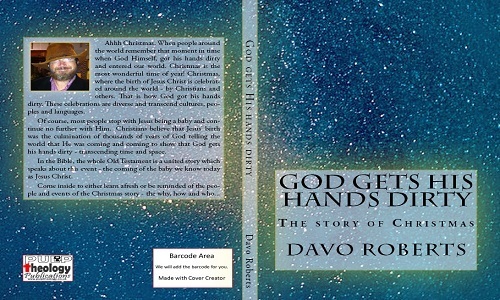
PulpTheology Book
"God Gets His Hands Dirty: The Story of Christmas"
Free on Kindle until end of Wednesday 27th December 2023. Click or tap here!
G’day! The book this week is "God Gets His Hands Dirty: The Story of Christmas". Inside this little book, there is something for you to learn afresh or be reminded about, regardless of who you are.
Ahhh Christmas. When people around the world remember that moment in time when God Himself, got his hands dirty and entered our world. Christmas is the most wonderful time of year! Christmas, where the birth of Jesus Christ is celebrated around the world - by Christians and others of all faiths and none. That is how God got his hands dirty. These celebrations are diverse and transcend cultures, peoples and languages.
Of course, most people stop with Jesus being a baby and continue no further with Him. Christians believe that Jesus’ birth was the culmination of thousands of years of God telling the world that He was coming and coming to show that God gets his hands dirty - transcending time and space.
In the Bible, the whole Old Testament is a united story which speaks about this event - the coming of the baby we know today as Jesus Christ. Written in short chapters and accessible language, we inspect together Christmas future through the eyes of Isaiah and Zechariah, before going on to look at Christmas past and Christmas present. Come inside to either learn afresh or be reminded of the people and events of the Christmas story - the why, how and who.
Whether you have not started the Christian journey yet, you are just starting your journey as a Christian, or have been a Christian for a while, you can either learn afresh or be reminded about the Church. Come on in!
"God Gets His Hands Dirty: The Story of Christmas" available on Amazon in paperback or Kindle with ISBN: 978-1506104348